



Discoveries About Rhythms of Life Important for Future Energy Technologies
EMSL user Jennifer Hurley details biological components and chemical pathways within fungi that may hold the key to future biofuels
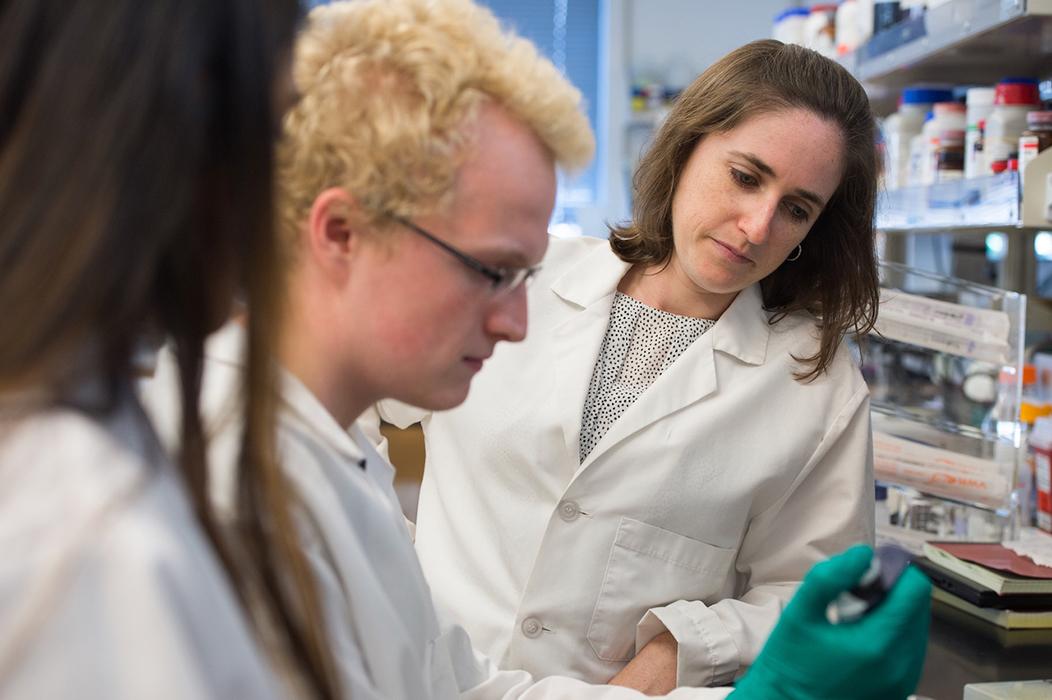
Student Zachary Chase (left) creates a system to express and purify a protein of interest as Jennifer Hurley (right), department head and professor of biological sciences at Rensselaer Polytechnic Institute, observes. (Photo courtesy of Rensselaer Polytechnic Institute)
Jennifer Hurley has dedicated her career to a deceptively simple question: how do living organisms know what time it is? The answer is far from simple.
As department head and professor of biological sciences at Rensselaer Polytechnic Institute (RPI), Hurley studies circadian rhythms—the internal clocks that regulate daily cycles in everything from molds to maple trees, from microbes to manatees.
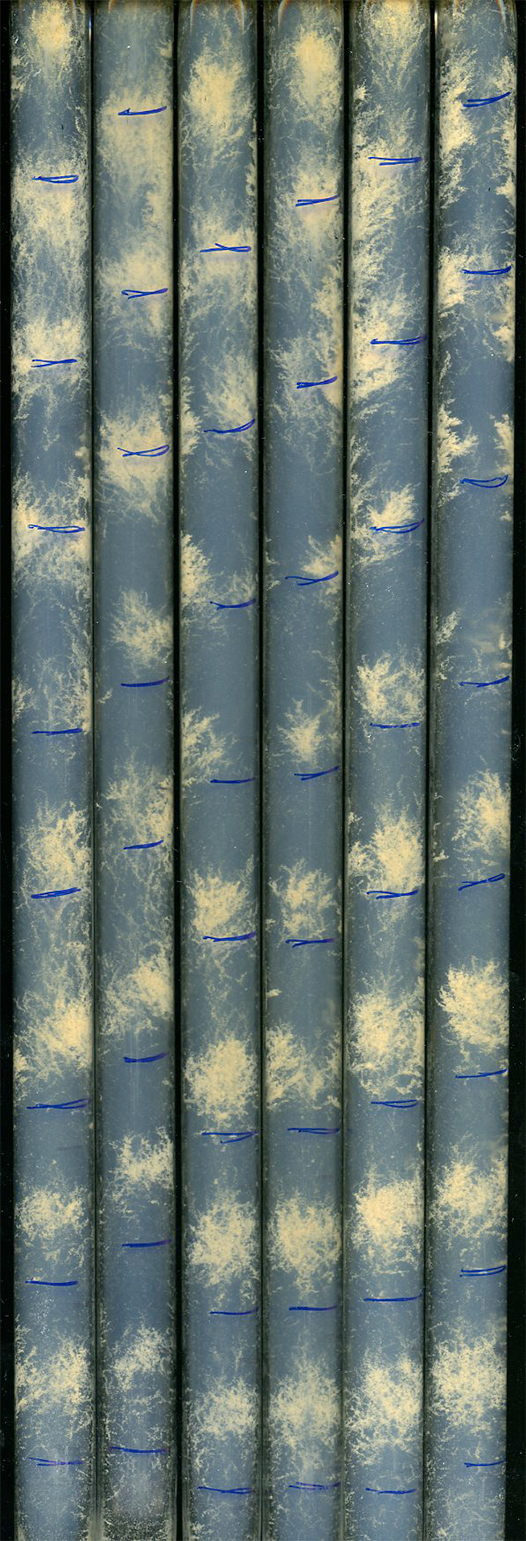
Hurley has dedicated years to studying the circadian rhythm of a type of fungi called Neurospora crassa. At particular times and under certain conditions, this fungi produces more of an enzyme called cellulase. Scientists use this enzyme to degrade a hardy substance in plant cell walls called lignocellulose to make biofuels.

Hurley said by studying how and when certain biological processes occur within the fungi to produce more of the enzyme, they can determine how to maximize the enzyme's production. The challenge, however, lies in mapping the intricate and complicated biological processes involved that are influenced by environmental factors such as the organism's circadian rhythm.
To study these processes, a variety of powerful scientific instruments are needed. That is ultimately what led Hurley to the Environmental Molecular Sciences Laboratory (EMSL).
EMSL, a Department of Energy Office of Science user facility at Pacific Northwest National Laboratory (PNNL), is home to more than 150 scientific instruments and capabilities spanning advanced chemical analysis, molecular imaging, and computational data processing, transformations, and modeling. These capabilities can be accessed by researchers at no cost to them after a competitive and peer-reviewed proposal process.
Through access to a range of capabilities at EMSL, Hurley has unraveled the molecular basis of how and when the fungi produce cellulase. These fundamental details can be used ultimately to alter components to improve the enzyme's production.
"EMSL has supported all kinds of large-scale projects that you just can't do anywhere else, primarily because of the equipment and the expertise," Hurley said.
With EMSL as a partner, Hurley has made Neurospora crassa one of the most extensively researched circadian biology models thanks to her comprehensive datasets.
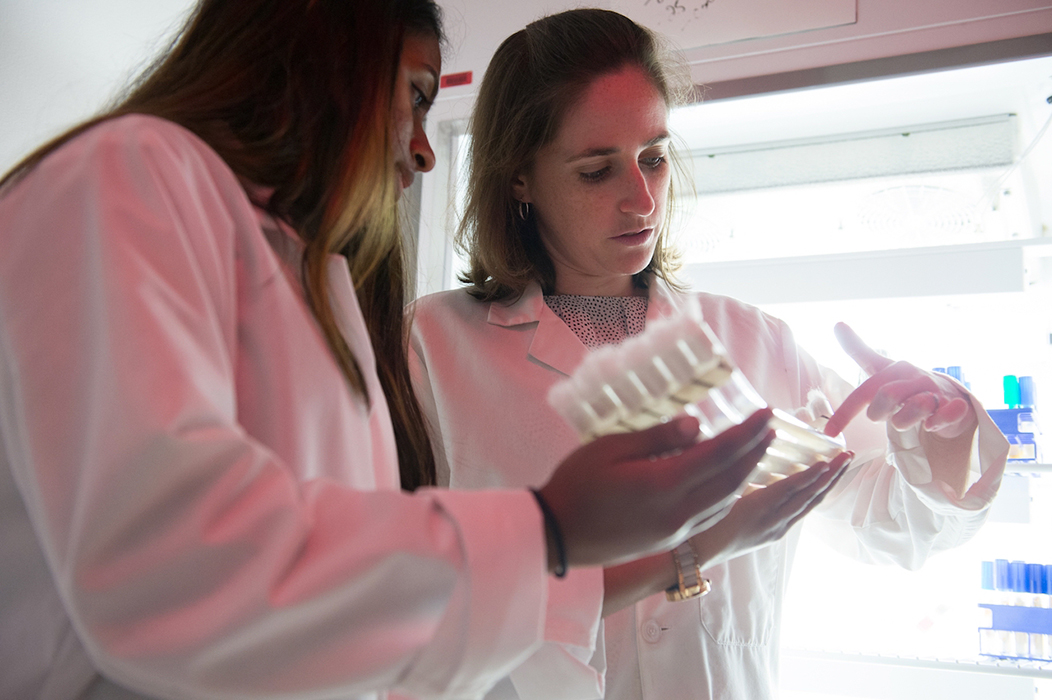
Standing the Test of Time
Over the years, Hurley has leveraged a range of EMSL resources, such as proteomics and high-performance computing for her research.
She used EMSL resources to study how the circadian clock controls gene expression in Neurospora crassa. She studied how certain proteins in the fungi oscillate throughout the day, activating or repressing cellulase gene expression. She also examined the metabolic pathways involved and influenced by the fungi's circadian rhythm.
Through a Facilities Integrating Collaborations for User Science (FICUS) project in 2021, Hurley gained access to multiple user facilities and laboratories under a single proposal which included EMSL, the Joint Genome Institute (JGI), and Oak Ridge National Laboratory (ORNL). This partnership used specialized facilities, such as ORNL's bio-SANS instrument and EMSL's cryo-electron microscopy (cryo-EM), to study how protein complexes form and change over time.
Hurley said cryo-EM allows them to look at large protein complexes and how they bind together. This indicates how interactions change the regulation of those proteins.
"With cryo-EM, we can identify critical interactions that can be targeted to enhance or stabilize cellulase gene activation, and therefore, maximize the production of cellulase," Hurley said. "And with bio-SANS, we can reveal the timing and conditions under which cellulase production is naturally optimized."
Through ongoing work under an accepted EMSL proposal, Hurley is now focused on developing a mechanistic understanding of how that timing is regulated. This will allow her and her team a way to modulate the expression of cellulase found under circadian control.
Looking Ahead: Timing the Future
As Hurley continues to explore these frontiers of molecular biology, her partnership with EMSL exemplifies how collaborative science can unlock new knowledge and drive innovation.
Hurley and her team have successfully documented the time at which most cellulases are made from Neurospora crassa—information they can use to produce more biofuels. They also now better understand the structure of proteins that impart the timing that coordinates when cellulases are made. This information has allowed them to design ways to enhance the production of cellulases.
Her upcoming projects aim to better understand how circadian rhythms affect metabolic pathways and protein structure, especially in relation to environmental stress and energy production.
The Hurley Laboratory at RPI continues to explore how clock-regulated gene networks affect cellulase enzyme production in Neurospora crassa. EMSL's metabolomics and nuclear magnetic resonance capabilities are expected to play a key role in profiling cellular metabolite cycles and linking them to protein function.
Additionally, Hurley plans to expand her use of EMSL's imaging platforms, including cryo-EM and super-resolution microscopy, to visualize protein organization in real time. These structural insights could help explain how circadian timing is encoded at the molecular level.
Hurley and her colleagues continue to push the boundaries of chronobiology, bridging molecular science with environmental and biomedical applications. Her work not only deciphers the rhythms of life but also helps shape innovation in molecular systems and functional biology.