



Microbial Communities in the Rhizosphere Create Functionally Distinct Soil Environments that Evolve Over Time
A multi-institutional team of researchers used a novel combination of in situ microsensors and high-resolution mass spectrometry to detail the real-time responses of microbial communities to root exudates and their associated specific biogeochemical conditions.
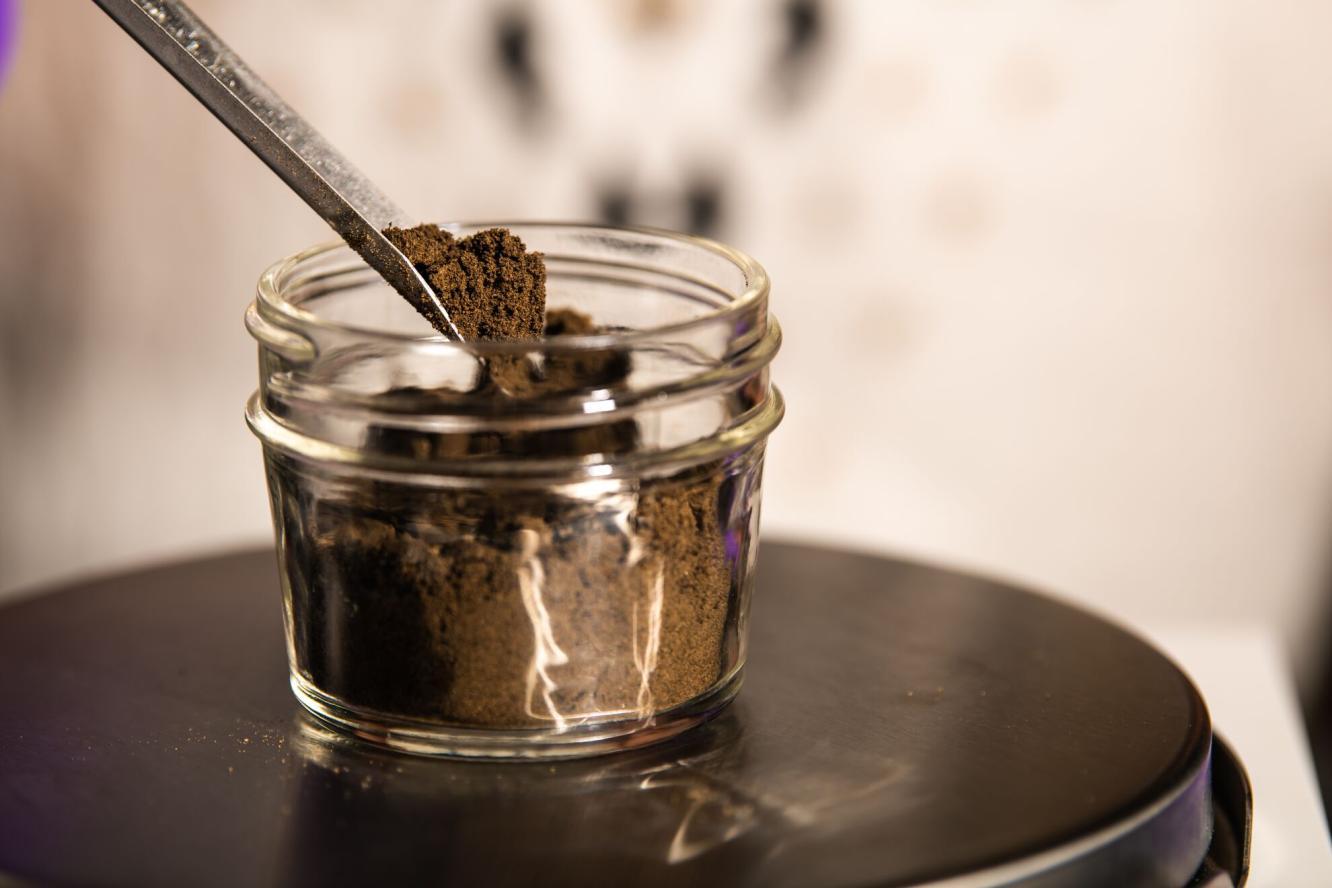
A multi-institutional team’s novel combination of microsensors and metabolomics shows potential for future work focused on disentangling how changes in root exudation reshape biogeochemical dynamics in the rhizosphere. (Photo by Andrea Starr | Pacific Northwest National Laboratory)
The Science
Previous studies have postulated links between microbial communities, exudates from different parts of plant roots, and biogeochemical reactions within soil environments. The inability to examine these environments at high spatial and temporal resolution, however, has prevented researchers from validating these linkages. Through a multi-institutional study, a team of scientists applied a novel combination of in situ microsensors and high-resolution mass spectrometry to show that microbial communities in the rhizosphere create functionally distinct environments that can change over time in response to exudates from different parts of the plant root. They found that microbial growth, metabolite and dissolved organic carbon concentrations, redox potential, and pH dynamics vary significantly among bulk soil, root tip, and mature root zones. Moreover, this work pointed to the importance of specific functional classes of metabolites rather than total concentration of dissolved organic carbon or its overall composition when considering how microbial communities evolve both in time and space.
The Impact

Through this study, a multi-institutional team of researchers applied a new combination of non-destructive advanced techniques, including in situ microsensors and high-resolution mass spectrometry, to uncover dynamic relationships between microbial communities, root exudates, and soil biogeochemistry. Whereas previous studies focused solely on either root exudation or biogeochemical rhizosphere dynamics, this study revealed spatiotemporal linkages between the three. The team’s novel combination of microsensors and metabolomics shows great potential for future work focused on disentangling how changes in root exudation reshape biogeochemical dynamics in the rhizosphere.
Summary
A multi-institutional team of researchers used a novel combination of in situ microsensors and high-resolution mass spectrometry and metabolomics to assess the relationship of root exudate dynamics, microbial communities, and associated biogeochemical conditions that emerge along single roots of Avena sativa. They assessed root interactions and soil biogeochemistry using custom-made rhizoboxes from the Environmental Molecular Sciences Laboratory, a Department of Energy, Office of Science user facility. Within the rhizoboxes, they performed continuous microsensor, microdialysis, and microbiosensor measurements. The microdialysis probes allowed team members to continuously collect metabolites for high-resolution mass spectrometry. The microbiosensors and microelectrodes were used to monitor microbial activity, pH, and redox potential. The team found that metabolite and dissolved organic carbon concentrations, microbial growth, redox potential, and pH dynamics vary significantly in different areas: bulk soil, root tip, and more mature root zones. The presence of sugars was found to significantly correlate with declines in redox potential upon root tip emergence, likely due to enhanced microbial oxygen demand. Additionally, the presence of organic acids correlated significantly to declines in pH upon root tip emergence. This work helps reveal greater details about the fate of nutrients, carbon, and contaminants in soils for bioenergy production and more.
Contacts
Marco Keiluweit
University of Lausanne
Will Kew
Environmental Molecular Sciences Laboratory
Funding
A portion of this research was performed on a project award from the Environmental Molecular Sciences Laboratory, a Department of Energy, Office of Science user facility sponsored by the Biological and Environmental Research program. Additional support was provided by the National Science Foundation Graduate Research Fellowships Program, a National Science Foundation award, and the University of Massachusetts Amherst Spaulding-Smith Fellowship.
Publication
M. Garcia Arredondo, et al. “Differential Exudation Creates Biogeochemically Distinct Microenvironments during Rhizosphere Evolution.” Environmental Science & Technology, 58, 42, 18713–18722 (2024). [DOI: 10.1021/acs.est.4c04108]