



Preparing Tomorrow's Scientists to Advance Discovery
In recognition of National Intern Day, EMSL highlights five interns contributing to research in the fundamental biological and environmental sciences
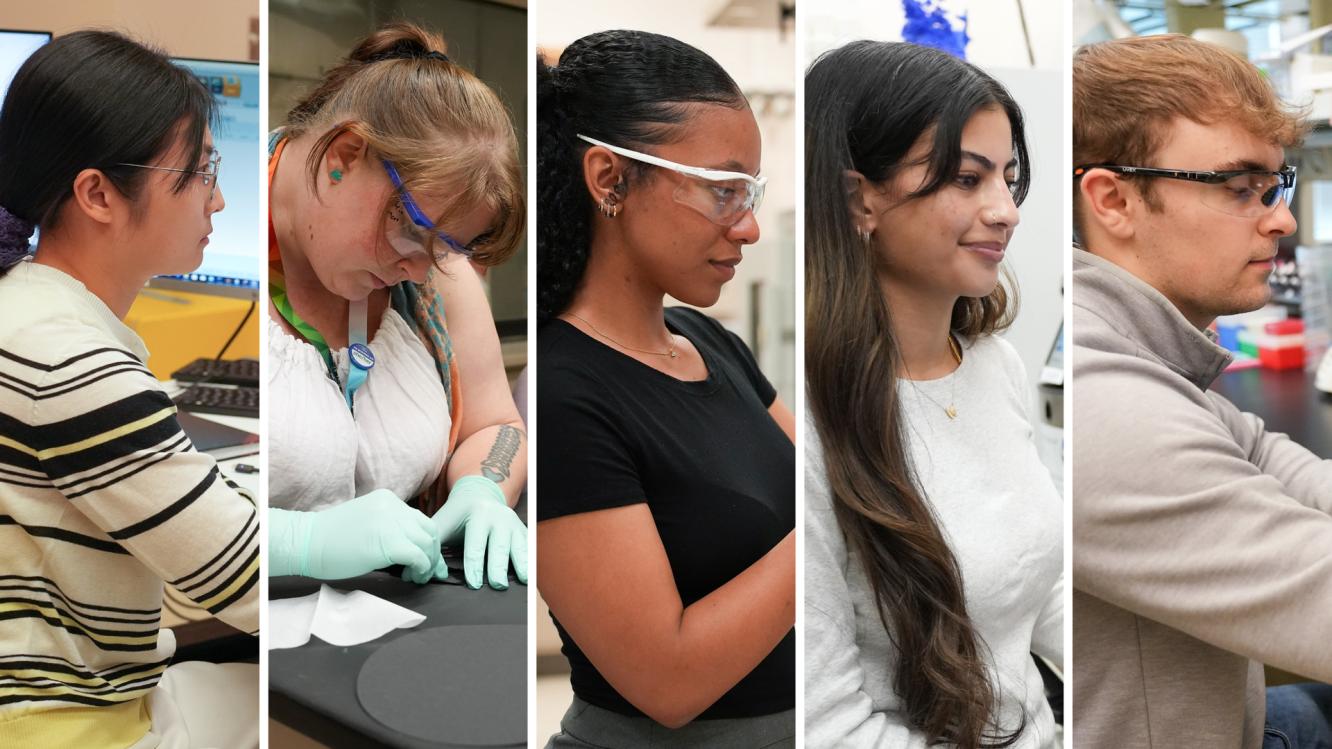
Interns experience many facets of the research process including working amongst scientists in a collaborative environment. (Photos by Maegan Murray, Pacific Northwest National Laboratory)
Hands-on research experiences help prepare the next generation of scientists and contribute to today's scientific discoveries.
At the Environmental Molecular Sciences Laboratory (EMSL), interns work alongside scientists on research spanning the fundamental biological and environmental sciences. Through mentorship and access to advanced scientific capabilities, students gain practical research experience while contributing to ongoing scientific investigations. EMSL's interns include students at every stage of their academic journey, from undergraduate through PhD programs.
In recognition of National Intern Day, five EMSL interns share how working at the facility helps shape their paths as future scientists.
Jing Li
PhD Intern
EMSL Integrated Research Platform: Terrestrial-Atmospheric Processes
What science do you contribute to at EMSL?
My research centers on atmospheric science with a specific focus on aerosol particles, cloud condensation nuclei, and ice-nucleating particles. This field is critical because these aerosols significantly impact human health and the hydrological cycle. Understanding their interactions with clouds is essential for reducing uncertainties in Earth system models and improving our ability to predict weather systems and broad-scale environmental shifts.
What does an average day look like as an intern in your internship experience area?
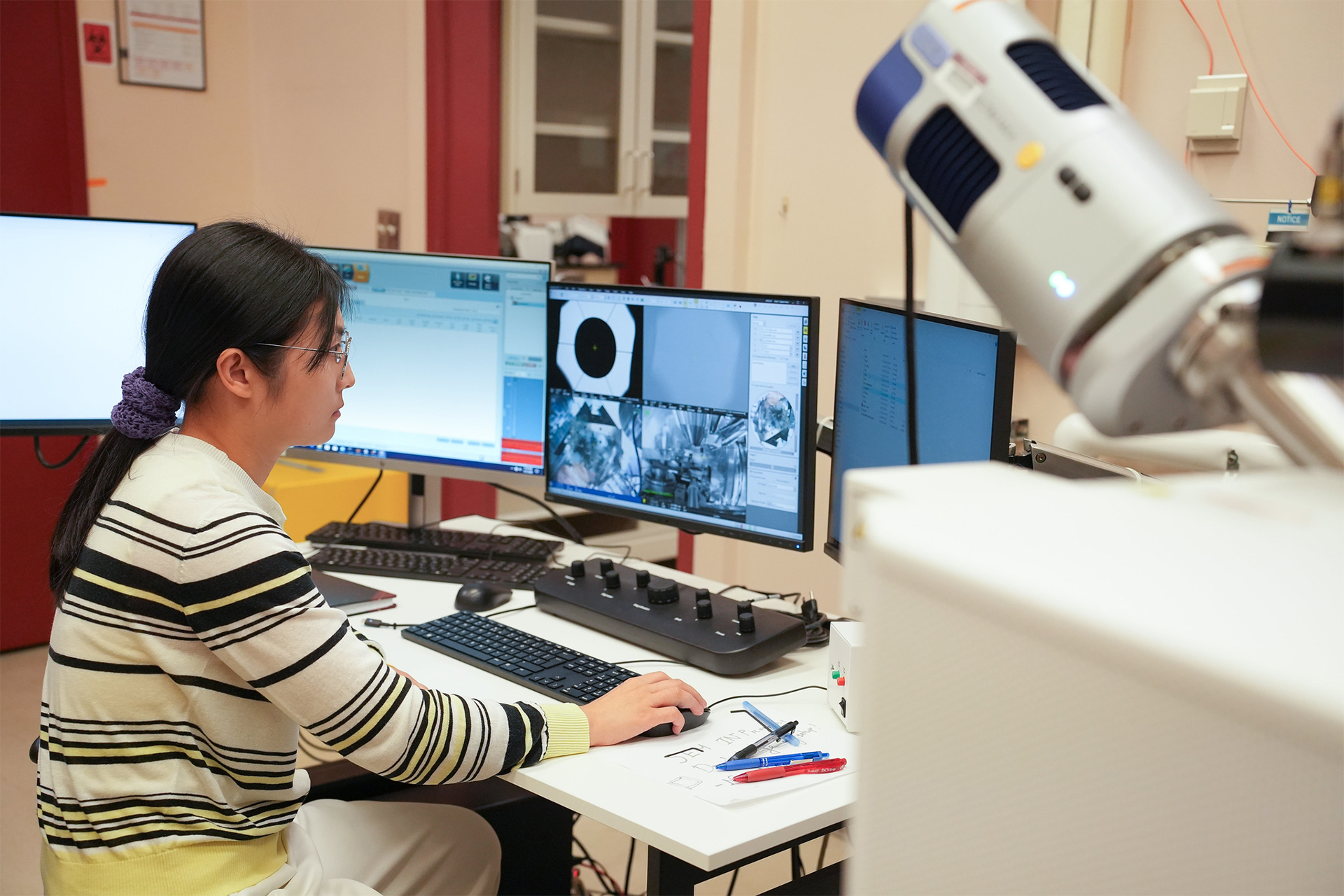
My typical day is a mix of laboratory experiments, data analysis, and problem-solving. I often spend my mornings writing and optimizing MATLAB scripts to process data, conduct statistical analyses, and create scientific visualizations of our measurements.
In the afternoons, I move to the lab to operate a computer-controlled scanning electron microscope to analyze the morphology and elemental composition of tiny particles.
Additionally, I assist in preparing materials and instrumentation for ongoing and upcoming field campaigns.
What has been your favorite part of your internship experience so far?
The most rewarding aspect has been the highly collaborative environment and access to world-class resources. As a user facility, EMSL provides unique opportunities to engage with researchers from various institutions.
I have particularly enjoyed the monthly Environmental Transformations and Interactions science area meetings, which consistently highlight the cutting-edge research being conducted. They also reflect the supportive nature of this scientific community.
What do you most hope to get out of your internship experience?
As I prepare for my PhD dissertation defense this coming August and the conclusion of my internship, I hope to finalize some key findings in my research and continue building a strong network with the amazing scientists here at EMSL.
Theia Moon
Former Community College Internships Intern and Current Undergraduate Tech Student
EMSL Integrated Research Platform: Biogeochemical Transformations
What science do you contribute to at EMSL?
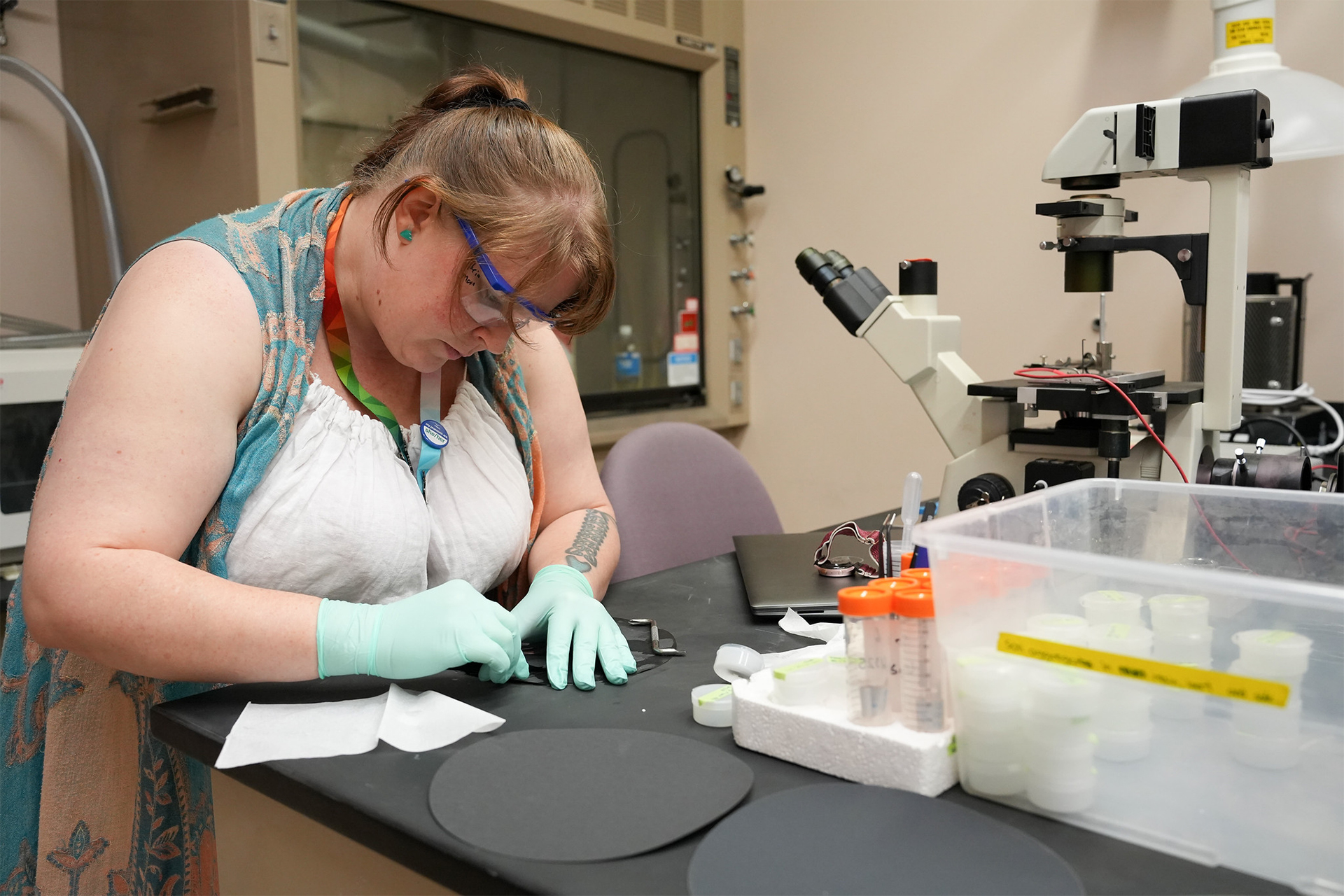
I analyze chemical and physical properties data stemming from high-end microscopy of niche materials to more accurately characterize their behavior and life cycle.
What does an average day look like as an intern in your internship experience area?
More and more, we are seeing a push for us scientists to be specialist–engineer–data scientists compared to being strictly subject matter experts. In my day-to-day, that's certainly true. I do a lot of data analysis on atom probe data. It's incredibly cool. We're looking at samples less than 100 nanometers thick, getting into the weeds of microstructures.
Because of the nature of the atom probe, I'm working with 3D maps of the sample in digital space, which allows me to really look at the structure of the samples down to the near atomic scale, which can tell us a lot about the properties. However, sometimes the tools we have on hand are insufficient, so we need to develop new analysis tools and I also get to be involved in that process—from conception to execution.
I also keep us organized with clean, thorough documentation, and I help with setup in the lab. Essentially, I wear a lot of hats and I live for it.
What has been your favorite part of your internship experience so far?
The thing in this internship that has made the biggest impact on my career is shadowing my mentor and fellow scientists. When I get to follow them around and ask questions, my perspective gets expanded. Being granted this opportunity is priceless. Part of that shadowing process is notetaking, which is so often undervalued as a part of research. Regularly, I've been a fly on the wall taking notes and keeping a running account as we perform an experiment. And I love it. The vernacular that I get to pick up and the exposure to new concepts are things I crave. Again, organization through clean, thorough documentation is vital to any lab's operations.
But, I think the thing I like most about this internship is getting feedback from my mentor, good and bad. The corrective feedback illuminates new concepts, helps me learn and improve. But the positive feedback? Feedback that the work I delivered was really cool or more than he asked for has made all the required effort worth it.
What do you most hope to get out of your internship experience?
The thing I hope to get out of this internship experience is just that: experience. There's no amount of schooling that can replace the deep understanding of how research works that you get in internships like this. As a bonus, I get exposure to some of the coolest scientific equipment, and connections to experts in my field.
This internship doesn't just make me marketable—it makes me formidable. It makes me someone worth hiring. I intend for this internship to be a stepping stone that launches me into a career where I get to be a powerhouse of a scientist.
Chase Robertson
Undergraduate Tech Student
EMSL Integrated Research Platform: Cell Signaling and Communication
What science do you contribute to at EMSL?
I have the opportunity to research proteomics, which is the study of proteins and how they interact within biological systems. At school, my research mostly focuses on human anatomy, including muscles, bones, and biological pathways.
What does an average day look like as an intern in your internship experience area?
An average day in my internship starts with arriving at the office at 8 a.m. and coding for a couple of hours. Coding isn't a specialty of mine. In fact, I had never coded before this internship, but I find it incredibly valuable. I get to see the results of the sample prep I help with, which really completes my overall understanding of proteomics.
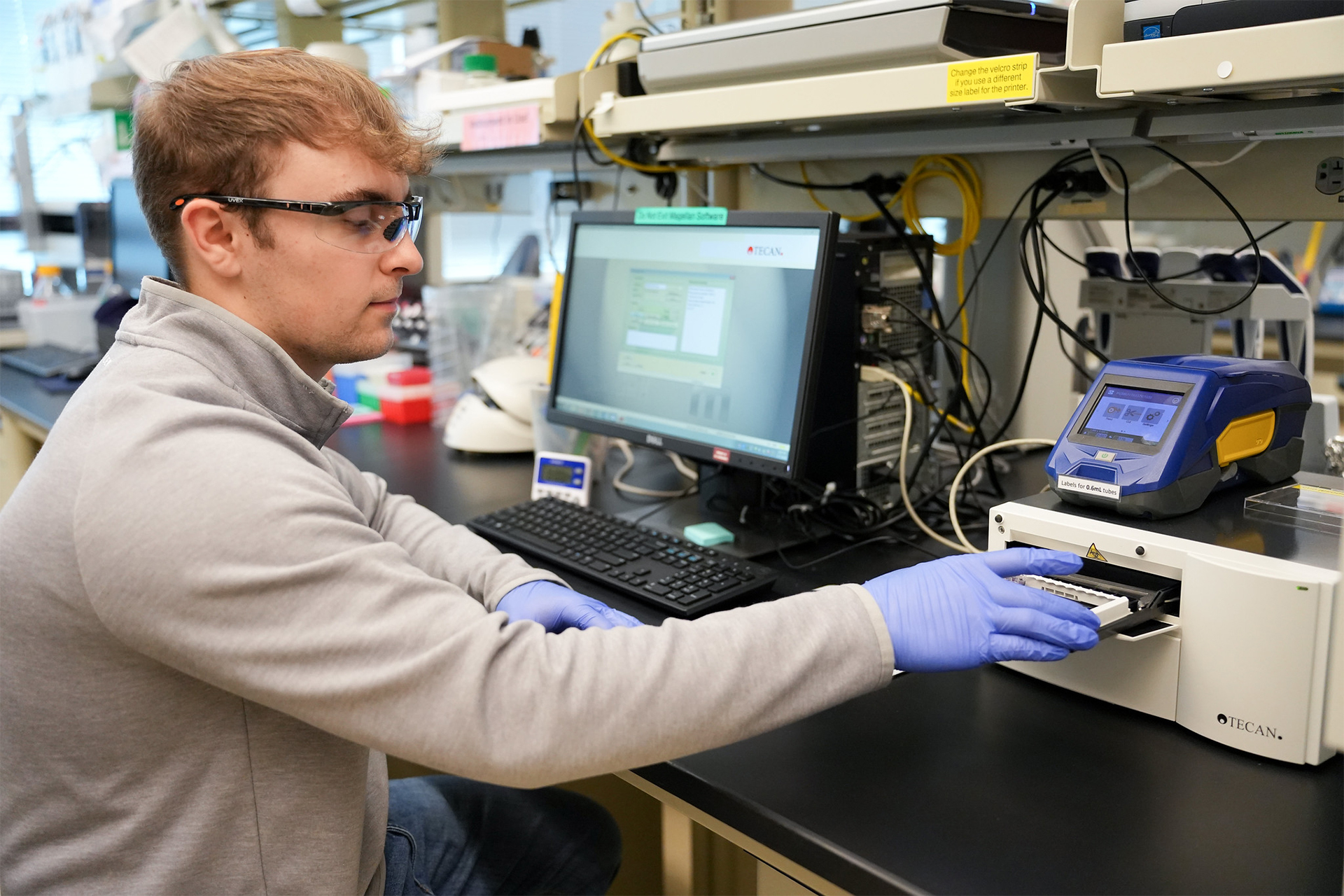
Later, I head to the sample prep lab where I handle a variety of tasks, including running bicinchoninic acid (BCA) assays, which is a biochemical method used to measure total protein concentration in a solution. I also make BCA standards, aspirate plates, and support the general workflow for whatever sample prep is happening at the time.
What has been your favorite part of your internship experience so far?
My favorite part of this internship has been having the opportunity to work with real samples and running them through the entire sample preparation process.
What do you most hope to get out of your internship experience?
My main goal is to gain hands-on experience in a professional lab setting. I'm using this opportunity to figure out exactly what I want to pursue for my future career. As of right now, I am leaning toward becoming a dentist or pursuing a career in some type of forensic analysis.
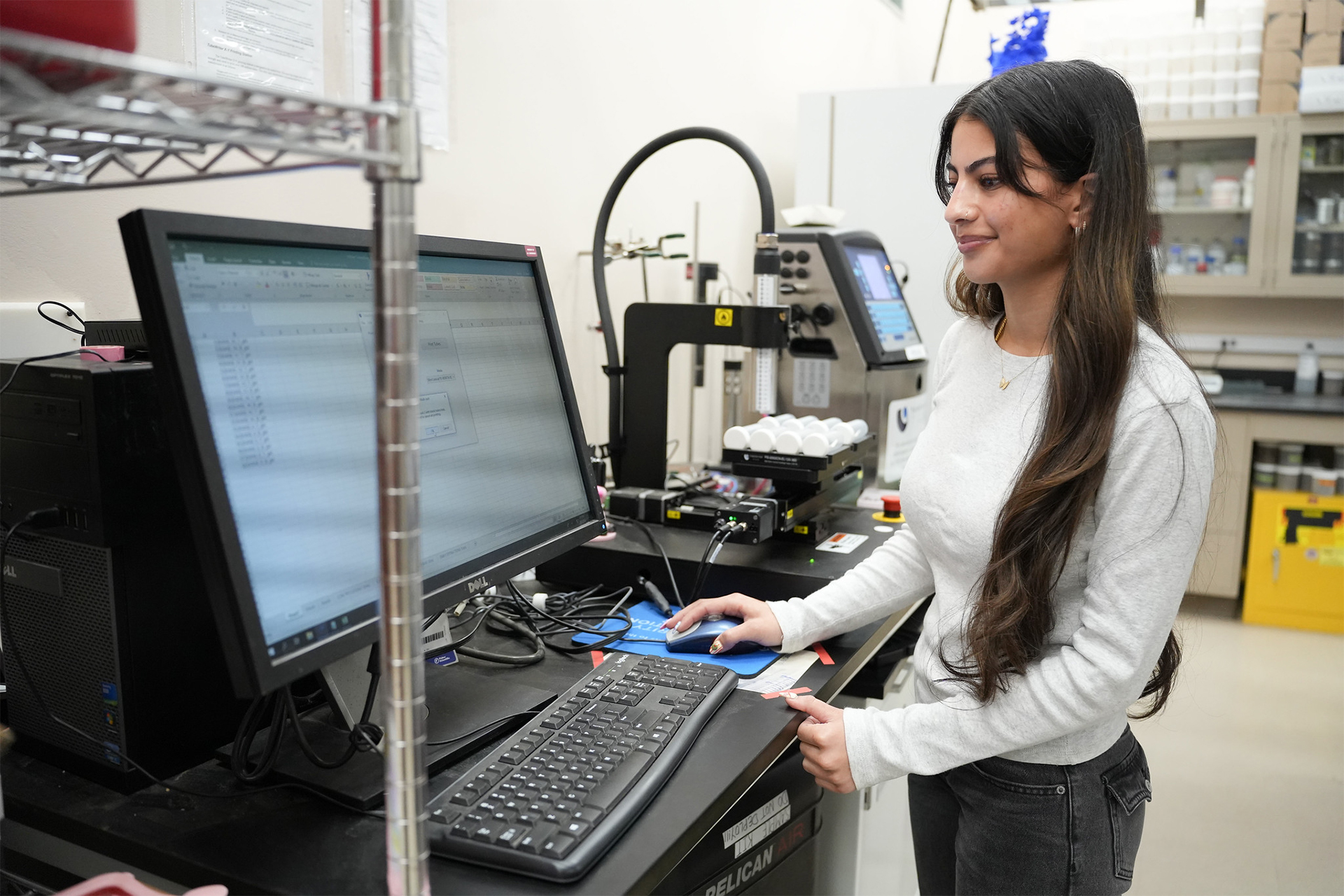
Ruqaya Talib
Undergraduate Tech Student
EMSL Integrated Research Platform: Biogeochemical Transformations
What science do you contribute to at EMSL?
I'm currently working with the Molecular Observation Network (MONet), where we're processing soil samples to see how soil systems evolve over time. This research focuses on the molecular and microscopic processes happening in the soil and how the microbial communities interact with the environment.
This work matters because it helps scientists understand things like the health of the soil, the tiny organisms that live in it, and how environmental changes affect these systems. Since soil plays a vital role in agriculture and ecosystem health, MONet aims to get a better understanding of its impact as a whole. It's fascinating work, and I'm lucky to be a part of it.
What does an average day look like as an intern in your internship experience area?
A typical day in the lab can be prepping for samples, which includes sending kits/coolers to users, making solutions, and printing tubes. When we receive samples, I assist with processing, prepare them for different analyses, and help with laboratory procedures like extractions.
During weeks when we're not receiving any samples, I take the opportunity to get caught up on some backlog items and assist with DNA prep so they can be ready to extract and sent to the Joint Genome Institute for metagenomic sequencing. I also help keep samples organized, handle archives and outsourcing, and take care of basic lab maintenance.
Every day is a little different, which keeps the work interesting.
What has been your favorite part of your internship experience so far?
What I've loved most is the hands-on experience I've gained in a real research lab and learning directly from scientists who are out there doing it every day. It's been amazing to develop new skills, be more confident using different techniques [and] equipment, and see how much collaboration is involved in making large projects happen.
I've also appreciated the opportunity to learn from mistakes and be able to ask questions as I go. Being able to contribute to work that's part of a larger effort has been rewarding for me.
What do you most hope to get out of your internship experience?
I'm hoping to continue building on my lab and research skills and get a clearer picture of what a career in science entails. I also want to build professional connections and continue to boost my confidence in a laboratory setting.
Ultimately, I hope this experience will help me determine my next steps after graduation, whether that's heading to grad school, pursuing a career in research, or exploring other science-related paths.
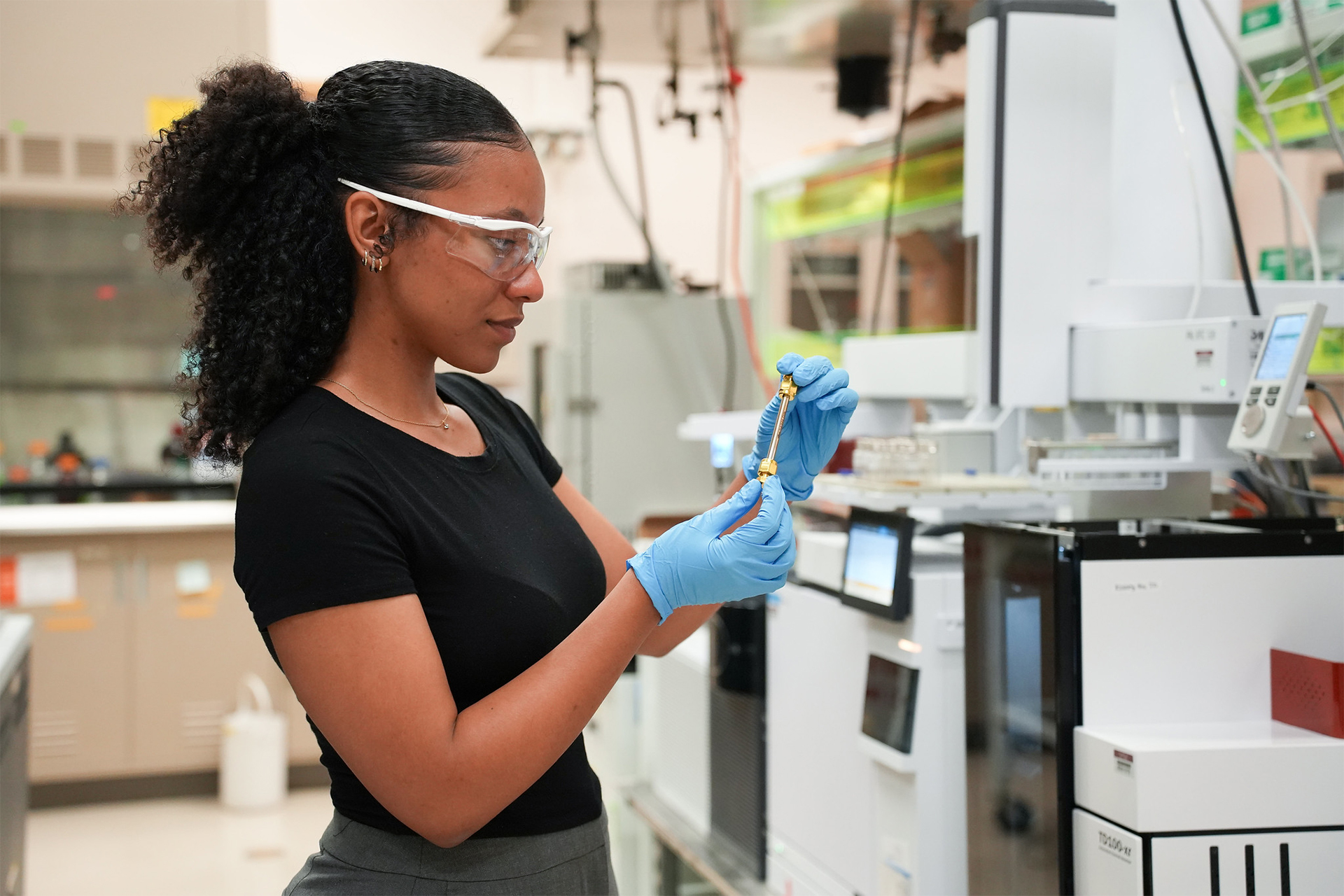
Cheyanne Williams
Science Undergraduate Laboratory Internships (SULI) Intern
EMSL Integrated Research Platform: Rhizosphere Function
What science do you contribute to at EMSL?
I study atmospheric chemistry, but I am a meteorology and atmospheric science researcher by major/training. Atmospheric chemistry is a branch within the atmospheric sciences that explores the chemical composition of our atmosphere and how it affects larger atmospheric processes or living organisms.
The field is extremely important because it studies the precursors to weather phenomena and atmospheric effects like precipitation and cloud formation. Regardless of whether it's a light drizzle or severe storm, there's a series of chemical reactions that lead to weather events. To produce better forecasts, you need atmospheric chemistry to understand what's happening from the source.
What does an average day look like as an intern in your internship experience area?
I start my day around 8:30 a.m. Usually, I start by checking in with my mentors about what tasks need to be completed, any updates they may have, or finishing up a project from the day prior. Depending on what is on the agenda, that is usually how I navigate my morning. Sometimes, if it's a rather large task, it will take up the whole day. But in between working, whether that's making graphs or interpreting results, I tend to have a few meetings.
As a SULI intern, there are a lot of meetings for professional development or deliverables that I must attend, so it gives me a good break in between heavy science work to socialize and operate the other parts of my brain.
I eat lunch around 12:30 p.m., which gives me a chance to meet with some of the other interns on campus and learn about what research they do and their experiences as a science, technology, engineering, and mathematics (STEM) student.
Afterward, around 1 p.m., I return to work, almost always finishing up some of the tasks I was doing before I took lunch. Many times, I'm preparing a small slide or recap of what research I've been doing for my mentors or the larger atmospheric chemistry group.
Sometimes in the afternoons, we will have larger presentations, which give me an opportunity to show the group what I've been working on, get feedback on what I could do to improve, and even ask questions and learn from other presentations. I end my day around 4:30 or 5 p.m.
What has been your favorite part of your internship experience so far?
So far, my favorite part about my internship experience is how much I've been able to grow as both a scientist and a person. Prior to working [here], I was a researcher on the East Coast focused specifically on severe weather phenomena. Now, I've moved to the other side of the country to research the "backstory" to the storm.
I've learned so much about not just the weather but also the atmosphere in general from both a chemistry and physics perspective, which has given me so much insight into how our atmosphere works as a system and even made me realize gaps in my understanding of severe weather research.
I have stepped so far out of my comfort zone and have had an incredible experience working with exceptional mentors who have encouraged me more than I could have ever imagined and built a network of like-minded and passionate STEM students to last a lifetime.
What do you most hope to get out of your internship experience?
Truthfully, my biggest hope to get out of this internship is knowledge. I went from not knowing what a volatile organic compound was on day one to giving a full presentation on the topic, and from only visiting local parks to hiking up Mount Rainier. I came [here] to apply my expertise in severe weather toward a related field within atmospheric sciences, but I hope to leave with an exceptional understanding of how our atmosphere works from the emission of a chemical compound to a storm's flash of the last lightning bolt.