


Unconventional Critical

Campaign name
Biogeochemical Processes Governing Critical Mineral Recovery in Mineral Dominated Systems (Unconventional Critical)
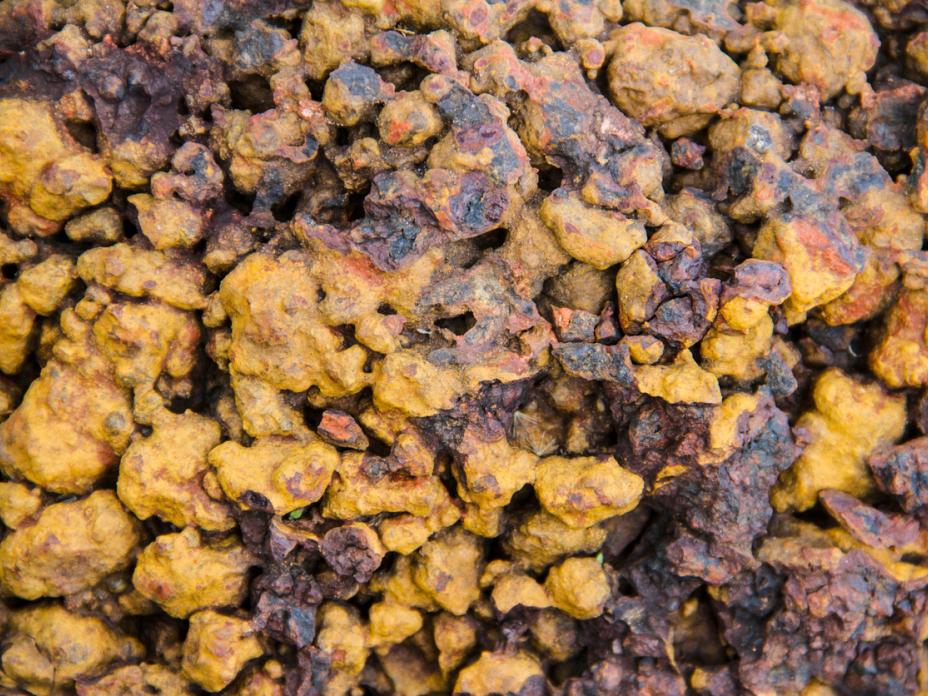
The recent presidential memo outlining national research and development priorities for FY 2027 highlighted the urgent and strategic need to identify, characterize, and process domestic sources of critical minerals and rare Earth elements needed to ensure American energy dominance and national security. "Lean" ores, including low-grade ores, mine tailings, geofluids, and other waste streams, are potential sources of critical minerals and materials (CMMs). However, these sources are too dilute for conventional mining approaches. Microbially driven "biomining" methods, which involve extracting CMMs using biological systems, offer a potential mechanism for extraction from unconventional source materials.
To deploy such biogeoinspired technologies, there is a need for improved fundamental understanding of the complex biological and geochemical processes that control the behavior of these mineral-dominated systems.
EMSL is uniquely equipped to tackle these challenges. In a campaign titled, "Biogeochemical Processes Governing Critical Mineral Recovery in Mineral Dominated Systems" (Unconventional Critical), EMSL will identify and characterize molecular and microscale mineral–water–microbe processes facilitating solubilization of CMMs in (non-soil) mineral–water–microbe systems. Through this campaign, EMSL expects to advance scalable mechanistic understanding of fundamental geochemical and microbial processes and rate controls that influence solubilization and transport of CMMs in sediments.
As part of this research, EMSL will create standardized data in the Molecular Observation Network (MONet) database, supporting the broader adoption of biomining approaches and enabling the elaboration of transferable process insights across sites and regions through advanced AI-guided simulation and process modeling approaches. Ultimately, these efforts will contribute to building sustainable, microbially driven approaches to critical minerals recovery in line with the energy security goals of the Department of Energy (DOE) and the presidential FY 2027 research and development priorities focused on critical minerals supply chains, advanced biotechnology for biomanufacturing, and AI-accelerated discoveries.
What Instruments and Resources Are Available to Use with this Campaign?
The MONet standardized soil core sampling, automated analyses platform, and associated growing database of structured, standardized physical, chemical, biological, and hydrological soil data from across the continental United States provide a unique resource for organizing campaigns, aggregating data, and comparing and transferring results across systems and regions. The MONet platform offers metagenomes and metabolic signatures that provide a foundation for accelerating the discovery of novel functional genes and novel biomolecules for critical mineral recovery. EMSL’s state-of-the-art molecular characterization capabilities and Terraforms micromodels provide unparalleled platforms for resolving molecular- and pore-scale processes in controlled model systems.
The MONet standardized sample collection activity will be adapted to include unconventional source materials and used as a foundational approach to understanding processes in mineral-dominated systems at scale, providing information on redox processes, microbial functional genes, and metabolic pathways and traits. To observe these processes at mechanistic levels, EMSL will expand the standardized MONet data types to encompass pore- and molecular-scale laboratory measurements. These will enable characterization of the chemical and physical forms of the CMMs, their host phases, and microbial processes and exudates that solubilize CMMs.
How Can You Get Involved with this Campaign?
Check out the recording below of our November 2025 community science meeting at which researchers worked to identify and prioritize critical minerals and materials (CMM) research needs aligned to EMSL's goals and the research priorities of the DOE Office of Science's Biological and Environmental Research (BER) program.
The meeting featured three keynote speakers:
- Heileen Hsu-Kim
- Professor, Department of Civil and Environmental Engineering, Duke University
- Presentation: “Resourcing Critical Minerals from Waste Streams: Lessons Learned from Extracting Rare Earths from Acid Mine Drainage”
- Rene Boiteau
- Assistant Professor, Department of Chemistry, University of Minnesota
- Presentation: “Mining Environmental Microbiomes for Selective Metallophores”
- Scott Angle
- Senior Vice President for Agriculture and Natural Resources, University of Florida
- Presentation: “Phytomining: Past, Present, Future, and Gaps”
Additional opportunities for user involvement will happen throughout the coming year. Stay tuned by joining the EMSL mailing lists and following EMSL on LinkedIn.
Who Should You Contact About this Campaign?
If you have questions or are interested in learning more about how you can participate, email Odeta Qafoku.
What are Related Reports to this Campaign?
Unconventional Critical Community Science Meeting Report - November 2025