



Functional and Systems Biology
An Activity-based Probe Library for Identifying Protein Function
A new approach leverages a chemically diverse library of fluorogenic substrates to unmask hidden enzymatic functions in complex microbial communities
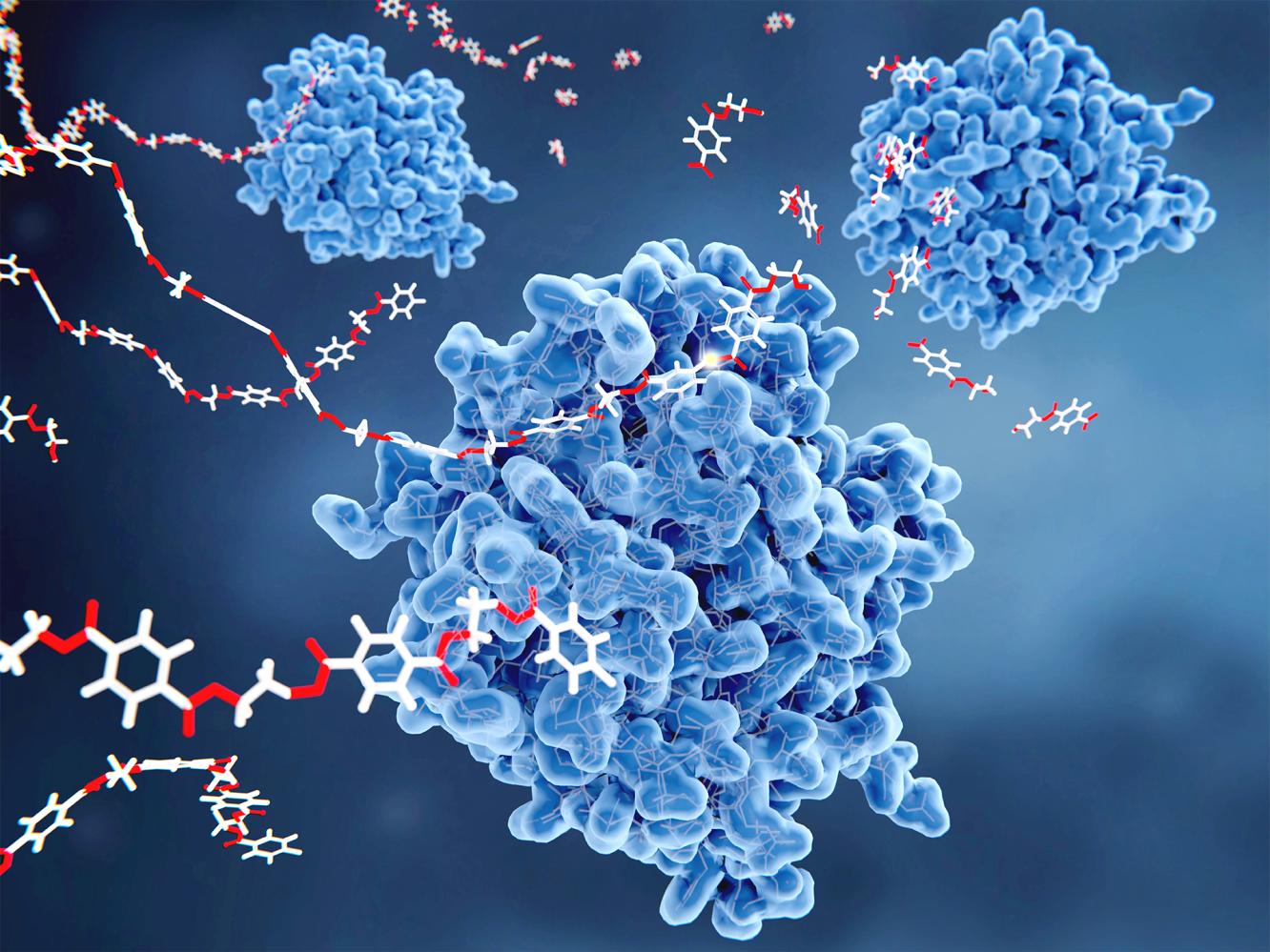
A team of researchers from Pacific Northwest National Laboratory and the Environmental Molecular Sciences Laboratory developed a new activity-based probe library to help unmask hidden enzymatic functions in complex microbial communities. (Illustration by selvanegra, iStock)
The Science
Proteins are vital for living systems. They build and repair tissues, act as enzymes to speed up chemical reactions, regulate hormones, and transport nutrients—all of which are important interactions for developing next-generation bioproducts and advancing bioengineering and biotechnology.
Determining the function of proteins is not only difficult using conventional scientific approaches but challenging because a specific protein often has more than one function. There is a need for complementary methods to understand proteins' functional contribution to phenotype—how genes are expressed as observable traits within an environment. Chemical probes are uniquely suited to bridge the gap in knowing the sequence of genes for a particular protein and what the protein does because they reveal enzyme activity directly, allowing researchers to connect predicted genes with a real biochemical function.
A fluorogenic substrate library was developed by a team of researchers from Pacific Northwest National Laboratory (PNNL) and the Environmental Molecular Sciences Laboratory (EMSL), a Department of Energy (DOE) Office of Science user facility. The library was used to visualize the activity of amide hydrolase (an enzyme that catalyzes the breakdown of amide bonds found in many biological molecules) from soil-derived bacteria that naturally degrade chitin (a tough natural polymer found in fungal cell walls, insect exoskeletons, and crustacean shells). Synthetic fluorogenic compounds that were separated into their individual molecules by microbial enzymes were converted into activity-based probes that enabled the identification of hydrolases with broad substrate tolerance.
The Impact
The development of this approach bridges the gap between genomic sequence information/data and the biological function of specific proteins by identifying active enzymes that traditional analysis methods often overlook.
By deploying a high-throughput library of chemical probes, the study successfully identified amide hydrolases in complex soil bacteria. The core innovation lies in the two-step identification and capturing workflow: using fluorogenic substrates to detect enzymatic activity in real time and converting those detections into tags for protein identification.
This method marks a significant advancement for profiling microbial proteins that have unknown function. The potential applications of this approach include environmental microbiology, biomanufacturing, and medicine.
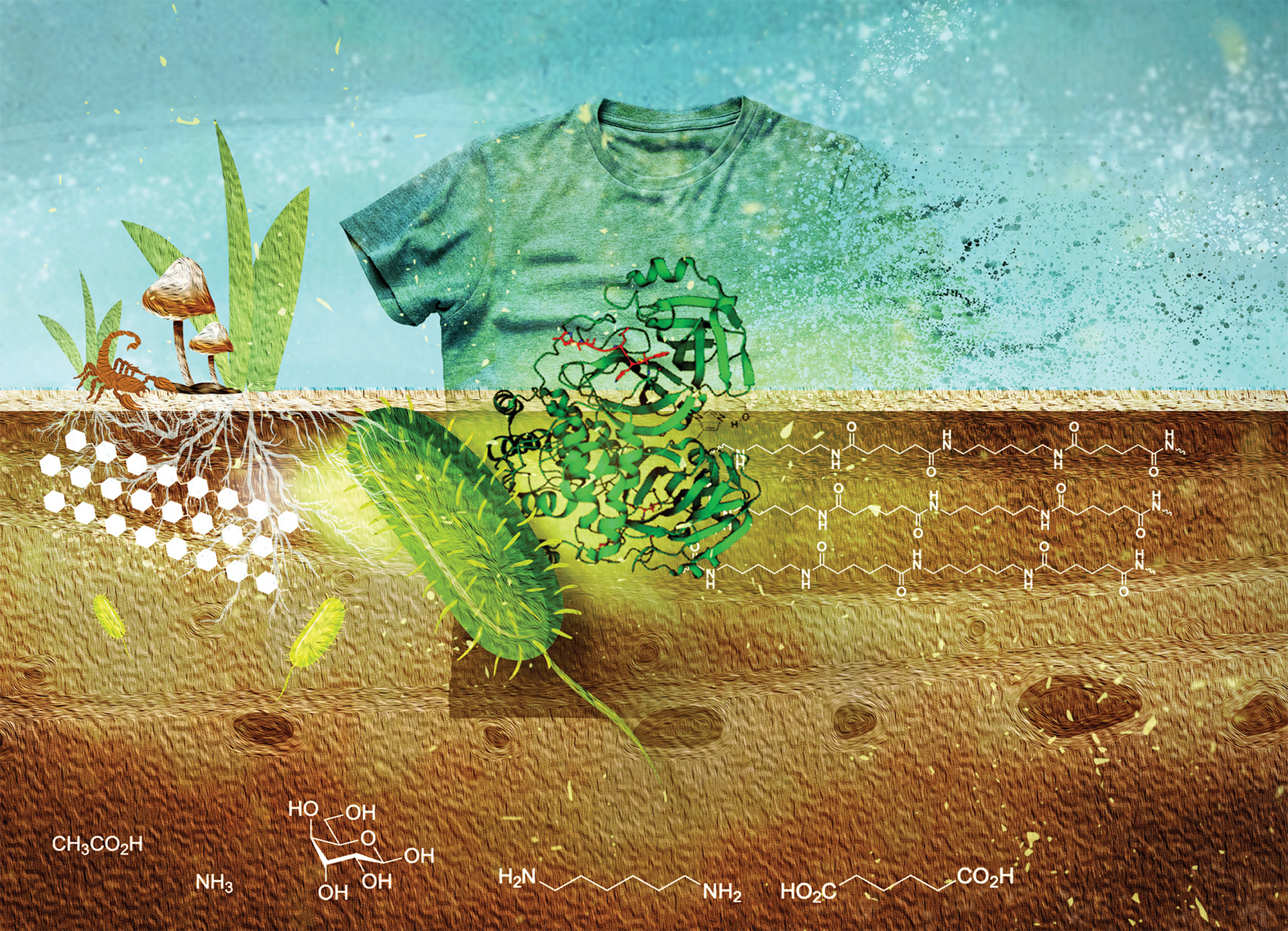
This research was featured on the back cover of ChemComm. (PDF)
Summary
In this study, a team of researchers from PNNL and EMSL developed a fluorescence chemical probe library to target amide hydrolase. They tested the library using soil-derived chitin-degrading bacteria to detect amide hydrolase activity. Researchers added a chemical tag to the highly active compound that enabled the enrichment of proteins. The team subsequently identified the proteins responsible for the observed activity using mass spectrometry. EMSL provided critical advanced mass spectrometry instruments to analyze and identify proteins corresponding to amide hydrolase activity.
This work demonstrates how a modular fluorogenic library can be used to functionally map unannotated, promiscuous amide hydrolases directly within native bacterial populations. The team's approach holds strong potential for driving a variety of biotechnology discoveries and advancements, of which some include identifying specialized biocatalysts capable of sustainable depolymerization and finding ways to upcycle synthetic polyamides like nylon.
Contacts
- Sankarganesh Krishnamoorthy, PNNL
sankarganesh.krishnamoorthy@pnnl.gov
- Kristoffer Brandvold, PNNL
krbrandvold@gmail.com
- Chathuri Kombala, PNNL
chathuri.kombala@pnnl.gov
Funding
This research was supported by a project award from the Environmental Molecular Sciences Laboratory, a DOE Office of Science user facility sponsored by the Biological and Environmental Research program.
Publication
C.J. Kombala, et al. "Activity-based probe library for identifying promiscuous amide hydrolases." Chem. Commun., 61, 17846–17849 (2025). [DOI: 10.1039/D5CC04162G]