


Three Researchers Elected to EMSL Advisory Committee
Helen Causton, Buck Hanson, and Ganesh Sriram will soon begin three-year terms advising facility leaders on user issues
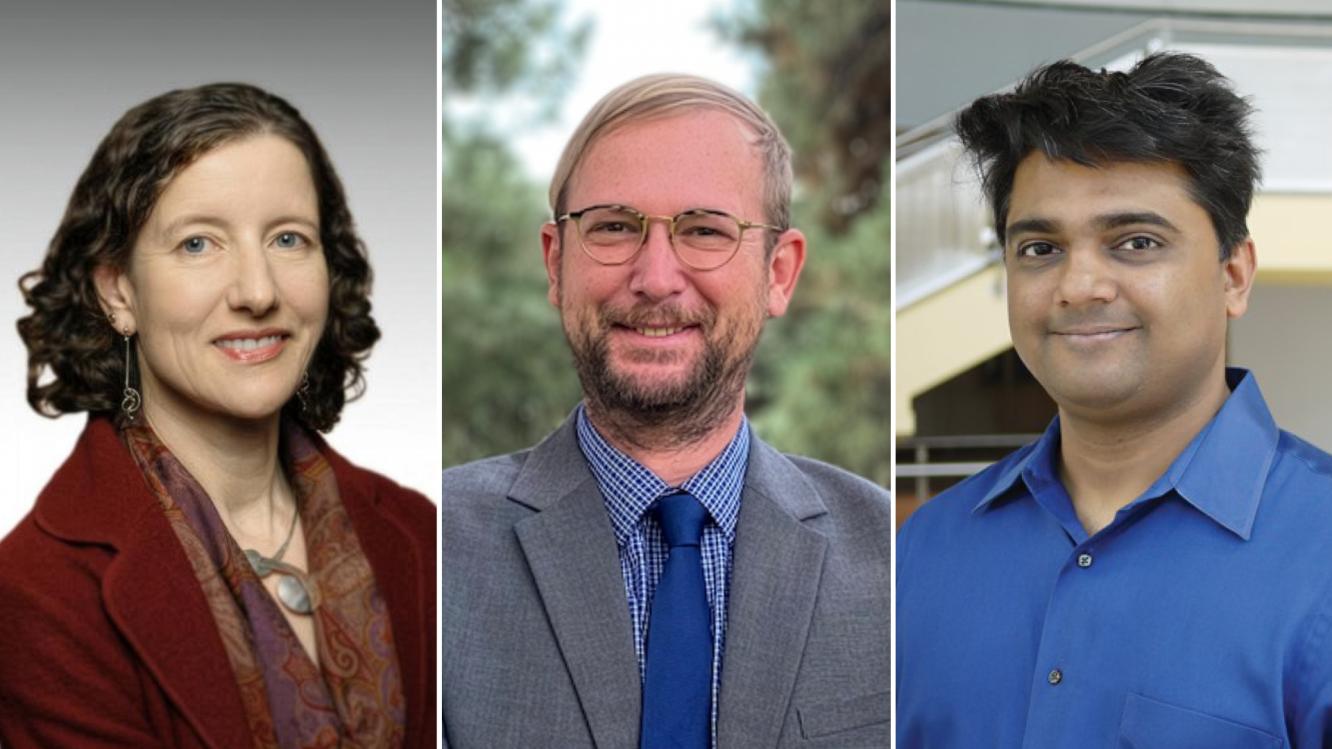
Researchers Helen Causton, Buck Hanson, and Ganesh Sriram (pictured left-to-right) recently won the 2026 elections for open EMSL User Executive Committee seats.
The User Executive Committee (UEC) at the Environmental Molecular Sciences Laboratory (EMSL) has announced the election of three new members:
- Helen Causton, Columbia University Medical Center
- Buck Hanson, Los Alamos National Laboratory
- Ganesh Sriram, University of Maryland
These researchers will begin three-year terms at the October 2026 UEC meeting. As committee members, they will advise EMSL's management team on issues affecting users, each focusing on an EMSL Science Area.
Meet the Researchers
Science Area: Functional and Systems Biology
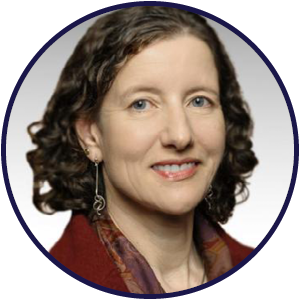
Helen Causton
Columbia University Medical Center
Helen Causton's work to understand the rules of metabolism requires significant resources and has benefited greatly from collaborations with EMSL for both data generation and development of more sophisticated models for representing metabolism. As an early member of the Microarray Gene Expression Data Society, she contributed to a number of papers that established and promoted standards for the description and reuse of high-throughput data including the Minimum Information About a Microarray Experiment (MIAME) proposal. She also set up and ran the Microarray Centre at the Medical Research Council Clinical Sciences Centre at the University of London, UK.
Science Area: Environmental Transformations and Interactions
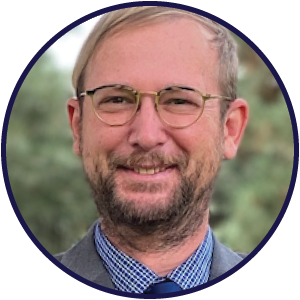
Buck Hanson
Los Alamos National Laboratory
Buck Hanson has been actively engaged with EMSL since starting his position at Los Alamos National Laboratory in 2021. His participation includes Exploratory Research, Large-Scale Research, and Facilities Integrating Collaborations for User Science (FICUS) projects, which have utilized a range of multiomics capabilities to characterize plant-microbe interactions—from metabolomics (nuclear magnetic resonance, liquid chromatography/gas chromatography-mass spectrometry, and isotope-ratio mass spectrometry) and isotope tracing of 13CO2 through plants into the rhizosphere, to microbial gene expression, to imaging (matrix-assisted laser desorption/ionization, nanoscale secondary ion mass spectrometry, and X-ray commuted tomography).
Science Area: Computing, Analytics, and Modeling
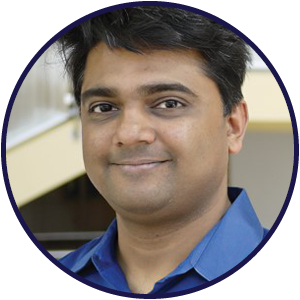
Ganesh Sriram
University of Maryland
Ganesh Sriram's expertise lies in metabolic network analysis and modeling, specifically in isotope labeling, isotopomer analysis by nuclear magnetic resonance and mass spectrometry, modeling of isotopomer networks, flux balance analysis, and kinetic modeling. Recently, he developed a robust framework for fast and comprehensive modeling of isotopomer networks. A recent collaboration with Helen Causton (a fellow newly-elected UEC member) and several EMSL personnel focused on developing models for yeast respiratory oscillations.
Learn more about the EMSL UEC.
Questions? Email the EMSL UEC.